




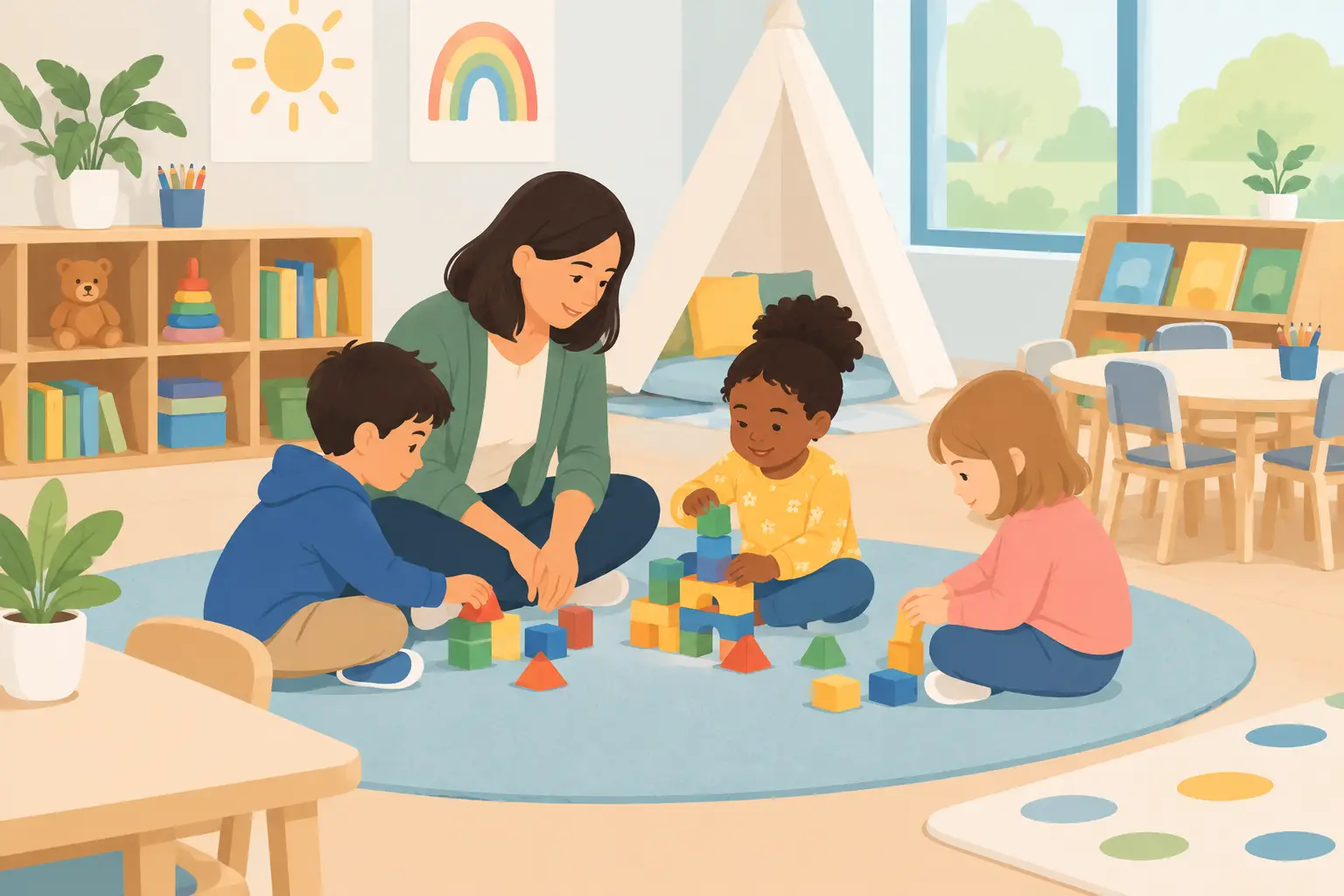
A child’s first school experience can shape how they feel about learning for years to come. When families choose a PreK learning environment, they are not simply selecting a classroom for the next academic year. They are choosing the adults, routines, language experiences, friendships, and standards that will help their child feel secure enough to explore and confident enough to grow.
For internationally minded families in Abidjan, that decision may carry an additional question: will this early foundation prepare my child for a changing world? A strong PreK program should meet children where they are today while building the habits, communication skills, and curiosity they will need for the years ahead.
Start With Your Child, Not the Brochure
Every parent wants an excellent school, but excellence should be visible in the way a school understands young children. PreK learners do not all arrive with the same level of independence, language exposure, confidence, or readiness for group routines. Some speak English at home. Others may be encountering it for the first time. Some eagerly join new activities, while others need time and reassurance before participating.
The right environment recognizes these differences without lowering expectations. Look for a school where teachers observe each child closely, communicate regularly with families, and adapt support to individual needs. A child should be encouraged to become more independent, but never rushed through a transition they are not emotionally ready to make.
During a school visit, pay attention to how adults speak to children. Are directions calm and clear? Do teachers kneel to a child’s level, listen carefully, and help children solve small problems? Young learners thrive when warmth and structure exist together. Kindness alone is not enough, and neither is a highly structured room without room for joy.
How to Choose a PreK Learning Environment That Feels Safe
Safety is the condition that makes meaningful learning possible. Before children can take academic risks, speak in a new language, or form friendships, they need to know that the adults around them are attentive and dependable.
Ask practical questions about arrival and dismissal procedures, campus access, supervision during play, health protocols, and how the school communicates with parents during the day. These details may seem administrative, but they reveal whether an institution has built a culture of care. Families should feel informed, welcomed, and confident that their child is protected throughout the school day.
Emotional safety matters just as much. In a healthy PreK classroom, children are allowed to make mistakes. They can spill paint, struggle with a zipper, mispronounce a new word, or need extra time to join a group activity without embarrassment. Teachers should guide children with patience while helping them develop self-control, empathy, and resilience.
A calm, organized classroom is also a positive sign. Materials should be accessible to children, learning areas should have clear purposes, and daily routines should be predictable. Predictability is especially valuable for children beginning school, adjusting to a new country, or learning English alongside their home language.
Look Beyond Play Versus Academics
Parents sometimes feel they must choose between a nurturing play-based program and an academically ambitious one. The strongest PreK environments do not force that choice. Purposeful play is one of the most effective ways young children learn, especially when experienced teachers connect activities to clear developmental goals.
Building with blocks can strengthen early math thinking, spatial awareness, collaboration, and persistence. Story time can build vocabulary, listening skills, imagination, and an early love of reading. A science activity can introduce children to observation, prediction, and the confidence to ask questions. These experiences are not separate from academic learning. They are the beginning of it.
At the same time, a high-quality program should have a thoughtful curriculum rather than relying on unplanned activity. Ask how teachers support early literacy, number sense, fine motor development, communication, and social-emotional growth. The answer should be specific and age-appropriate. PreK is not about pushing children into worksheets or expecting them to perform like older students. It is about creating a rich foundation for future success.
Consider the Power of Language From the Beginning
For families seeking an international education, language development deserves special attention. English fluency opens doors to a globally recognized curriculum, future academic opportunities, and meaningful communication across cultures. Yet children who begin with limited English need an approach that is encouraging, intentional, and respectful of their existing strengths.
An effective English-language environment uses songs, stories, visuals, routines, conversations, and play to make new vocabulary meaningful. Children learn best when language has a purpose: asking for a turn, describing a drawing, sharing an idea, or listening to a friend. They should not feel that speaking another language is a barrier to belonging.
Ask how the school welcomes children who are new to English and how progress is monitored. The best support is not isolation from the class community. It is guided participation that helps children grow in confidence while remaining fully included in daily learning.
Bilingual development is an advantage, not a compromise. Children can build English proficiency while maintaining connection to their family language, culture, and identity. A school that values this process helps children develop the flexibility and cultural awareness expected of future global citizens.
Examine Relationships, Class Size, and Teacher Quality
A beautiful campus cannot replace strong relationships. In PreK, children learn through connection. They need teachers who can recognize when a child is ready for a challenge, when they need comfort, and when a quiet child has an important idea waiting to be heard.
Class size and adult-to-child ratios influence how much individual attention is possible. Smaller groups generally allow teachers to observe more closely, respond more quickly, and build stronger relationships with families. However, numbers alone do not tell the entire story. Ask about the experience of the teaching team, the consistency of staffing, and how teachers collaborate to support each child.
A quality PreK teacher combines professional expertise with genuine enthusiasm for young learners. They understand child development, know how to guide behavior constructively, and can make learning feel both engaging and purposeful. They also communicate with parents in a way that goes beyond reporting daily events. Families should receive meaningful insight into their child’s progress, strengths, and next steps.
Think About the Years After PreK
PreK should be joyful in its own right, not merely preparation for the next grade. Still, parents should consider whether the school offers continuity as their child grows. A coherent educational pathway can reduce disruption and allow children to build confidence within a familiar culture of high expectations and support.
For mobile families, an American curriculum can provide valuable consistency when relocation or international university plans are part of the future. For local families, it can offer a globally recognized academic route while their children remain connected to their home community. What matters is not the label of a curriculum alone, but how clearly the school can explain its progression from early childhood through graduation.
IUDSchool’s approach reflects this long-term perspective by pairing an American educational pathway with individualized language support and a commitment to each child’s overall well-being. For a young child, a future-focused education begins with something simple and powerful: feeling known, safe, and excited to come to school.
Questions Worth Asking During a Visit
A school visit should help you see daily life, not just facilities. Ask how teachers help new children settle in, how they respond to conflict between classmates, and how they support a child who is learning English. Request examples of what children are learning through art, play, stories, movement, and early math activities.
Also ask how families are included in the learning process. Strong partnerships are built through regular communication, shared expectations, and a willingness to discuss concerns early. The right school will welcome thoughtful questions because it understands that trust is earned through transparency.
Finally, notice your child’s response. Do they seem curious about the room? Do they watch the teacher with interest? A child may be shy during a first visit, and that is completely normal. But the atmosphere should feel inviting, orderly, and full of possibility.
The best PreK environment does more than help children get ready for school. It helps them discover that school can be a place where they are safe to ask, create, try again, make friends, and imagine a larger future. That feeling of belonging is a remarkable place to begin.
🐦 Kicau Mania
Nikmati suara burung terbaik setiap hari! Rawat, latih, dan cintai burung kicauanmu.