




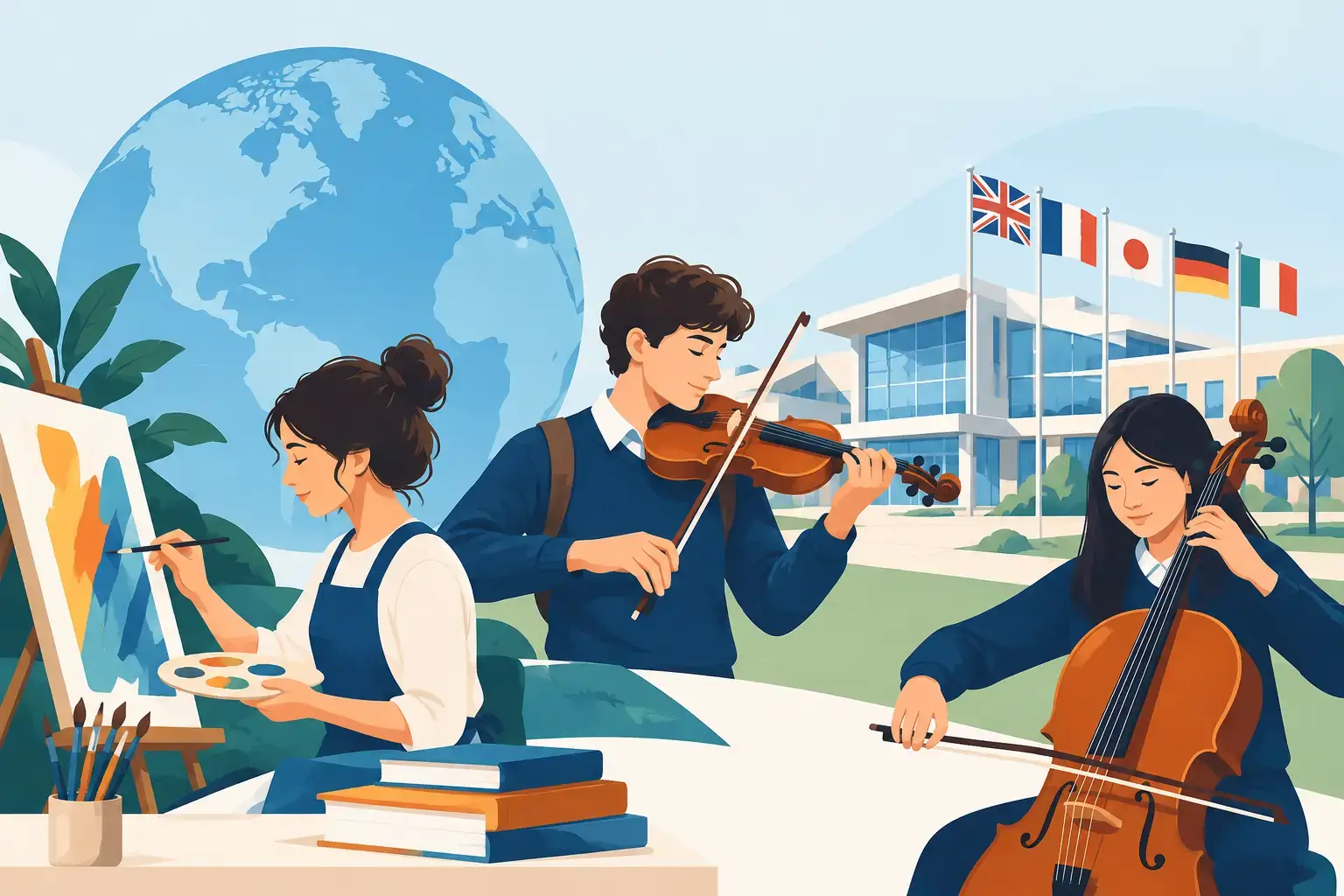
A child stepping onto a stage, presenting an original artwork, or rehearsing with classmates is doing far more than preparing for a performance. They are learning to listen, take responsibility, communicate under pressure, and believe in their own ideas. For families seeking an arts and music international school, these experiences should not sit apart from academic ambition. They should strengthen it.
For internationally minded families in Abidjan, the right school must offer a credible academic path while giving children room to develop confidence, creativity, and character. This balance matters whether a child is beginning PreK, transferring from another school, arriving from abroad, or preparing for competitive university applications years ahead.
What an Arts and Music International School Should Offer
Arts and music are sometimes viewed as pleasant additions to a school day. In a strong international education, they are part of how students learn to think. Creative disciplines ask children to observe closely, make choices, revise their work, and share it with others. Those are habits that support success in English, mathematics, science, research, and leadership.
The value is not limited to students who hope to become artists or musicians. A child who learns rhythm develops concentration and timing. A student who works on a visual project learns to plan, solve problems, and explain decisions. A group performance teaches cooperation in a way that cannot be replicated by an individual worksheet.
Creative confidence begins early
For younger children, creative learning supports language development and emotional growth. Drawing, singing, movement, storytelling, and imaginative play give children many ways to express what they understand before they have the vocabulary to explain it fully. This can be especially reassuring for children who are still developing English.
As students grow, the expectations can become more sophisticated. They can learn to interpret ideas, respond to feedback, practice consistently, and present work with pride. The goal is not perfection. It is the ability to stay curious, improve through effort, and contribute thoughtfully in a group.
Music teaches habits that last
Music has a particular role in building discipline with joy. Progress often comes through regular practice, careful listening, and patience with small improvements. Students learn that preparation affects the quality of a shared result. They also learn that their contribution matters, whether they have a leading role or support the larger group.
For busy families, this is one reason arts and music deserve a serious place in a child’s education. They help turn abstract values such as commitment, resilience, and teamwork into daily practice.
International Standards Give Creativity Direction
Creative opportunity alone is not enough. Families need assurance that their children are progressing through a curriculum that is recognized, transferable, and designed for long-term academic success. An international school should pair expressive learning with clear standards, experienced teachers, and a structured pathway from early childhood through high school.
A complete American curriculum can provide that continuity. Students build foundational skills in the early grades, develop stronger analytical and communication abilities through middle school, and prepare for advanced coursework and university admissions in high school. When arts and music sit within this broader academic framework, children do not have to choose between being creative and being ambitious.
They learn that these strengths belong together. Universities and future employers value students who can write clearly, analyze evidence, collaborate across cultures, present ideas persuasively, and approach unfamiliar problems with imagination. A school experience that develops both academic rigor and creative confidence prepares students for that reality.
At IUDSchool, families can pursue an accredited American educational pathway while ensuring that each child is known, supported, and challenged as an individual. For students with international futures, this continuity offers meaningful reassurance.
Language Support Is Central, Not an Afterthought
Many families moving to an English-language school have a practical concern: What happens if my child does not yet speak English confidently? The answer should never be to wait until the child is fully prepared. With the right support, school itself becomes the place where language grows.
An effective language integration approach helps students enter at an appropriate level while participating in the life of the classroom. They need explicit support with vocabulary, reading, speaking, and writing, but they also need opportunities to use English naturally with teachers and peers. Art, music, and collaborative projects can make this process feel less intimidating because children can communicate through action, images, sound, and shared tasks as their language develops.
The pace will differ from one child to another. A confident speaker may begin participating quickly but need more time to master academic writing. A quiet student may understand far more than they initially say. Families should look for a school that recognizes these differences and monitors progress with care rather than making assumptions based on a child’s first weeks.
How to Evaluate an Arts and Music International School
A school visit should help parents look beyond attractive classrooms or an impressive event. Ask how creative subjects are planned across grade levels and how teachers connect them to broader learning goals. The most meaningful programs are consistent, age-appropriate, and built into the educational experience rather than offered only occasionally.
You should also ask about the school’s academic credentials and future pathways. Is the curriculum internationally recognized? Can a student transfer smoothly if the family relocates? Does the high school program lead to a respected diploma? Are advanced courses available for students ready for greater challenge? These questions matter because a child’s interests can change, but a strong academic foundation keeps options open.
Equally, pay attention to the environment. Children thrive when they feel safe enough to take intellectual and creative risks. Small classes, attentive teachers, clear expectations, and respectful communication with parents all contribute to that sense of security. A school should be able to explain not only what it teaches, but also how it supports student well-being, engagement, and growth.
For families enrolling during the academic year, flexibility deserves attention as well. Midyear transitions can be demanding, particularly for children who are adapting to a new language, country, or curriculum. A thoughtful admissions and onboarding process can make the change feel manageable and help the student settle into learning more quickly.
A Stronger University Story Starts Before High School
University preparation is not limited to grades earned in the final years of school. It begins much earlier, in the habits children build over time. Students who learn to manage a project, perform before an audience, revise work after feedback, or collaborate with classmates are practicing skills that will later strengthen essays, interviews, portfolios, and leadership opportunities.
By high school, arts and music can also help students show depth beyond test scores. This does not mean every student needs an extensive performance record or a formal portfolio. It means they should have opportunities to pursue genuine interests, take initiative, and develop a sense of identity alongside academic achievement.
The trade-off is real: students need enough time and structure to meet demanding academic expectations. The best school experience does not overload children with activities simply to create an impressive profile. It helps them choose commitments that are meaningful, sustainable, and appropriate for their stage of development.
Choosing With Your Child’s Future in Mind
Parents do not need to decide whether their child is “artistic” or “academic.” Children are more complex than those labels. They may love numbers and rhythm, science and design, literature and performance. An education that respects this range gives them more ways to discover where they can excel.
When considering an arts and music international school, look for a place where high expectations are matched by genuine care, where English-language learners are welcomed with a clear plan, and where creative expression supports a globally recognized academic journey. The right environment gives children a secure place to grow now and the confidence to imagine a much larger future.
A school choice is never only about the next grade level. It is about giving your child the encouragement, discipline, and international perspective to step forward with purpose.
🐦 Kicau Mania
Nikmati suara burung terbaik setiap hari! Rawat, latih, dan cintai burung kicauanmu.