




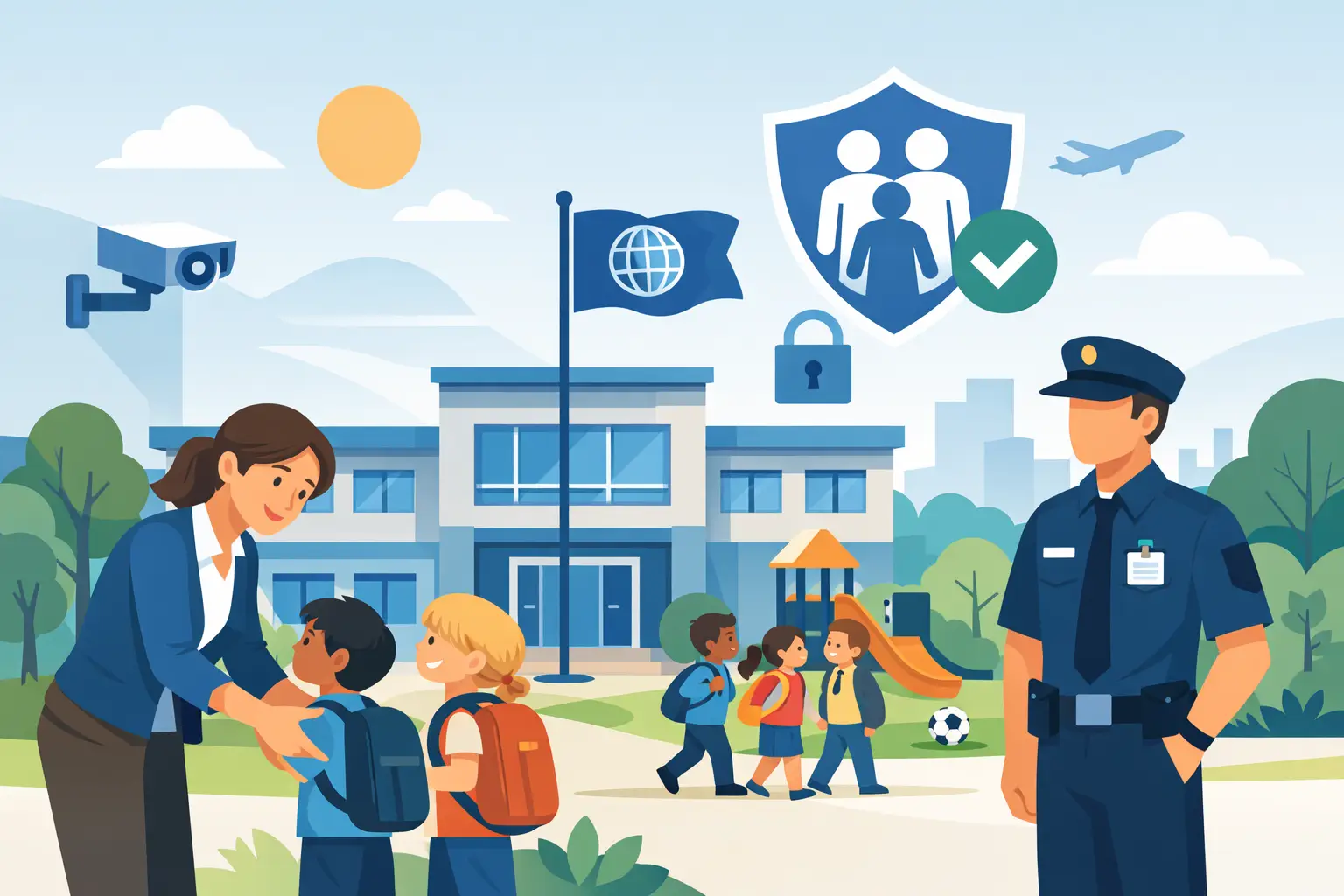
A child’s first feeling when arriving at school shapes everything that follows. When students feel recognized at the gate, comfortable in the classroom, and confident that adults will listen, they are more ready to learn, participate, and build meaningful friendships. A safe international school environment is not simply about physical protection. It is the daily experience of being cared for, challenged appropriately, and treated with respect.
For families in Abidjan, especially those navigating an international move, a new language, or a change of curriculum, that sense of safety carries even greater weight. Parents want more than a strong academic program. They want a school community where their children can grow with confidence while preparing for a future that reaches far beyond the classroom.
Safety begins with clear routines and trusted adults
Children thrive when the adults around them are consistent. From arrival and dismissal procedures to classroom expectations and communication with families, clear routines help students understand what to expect. This is particularly valuable for younger children, who gain independence through predictable structures, and for students joining from another school system, who may need time to settle into new expectations.
A secure campus matters, but safety should never feel cold or restrictive. The best school environments combine thoughtful access procedures with a warm welcome. Students should know who they can turn to when they have a question, feel unwell, face a conflict, or simply need reassurance. Parents, in turn, should be able to trust that the school has established processes for supervision, visitor management, student release, and emergency response.
That trust is built through everyday professionalism. Teachers and staff who know students well are often the first to notice a change in mood, behavior, participation, or academic performance. Early attention can prevent a small concern from becoming a larger obstacle to learning or well-being.
A safe international school environment supports belonging
International schools bring together students with different languages, cultures, family traditions, and previous educational experiences. This diversity is one of their greatest strengths. Yet it also requires intentional care. A student who has recently arrived in Abidjan, or who is still learning English, may feel uncertain before they feel included.
Belonging cannot be left to chance. It grows when teachers pronounce names correctly, invite different perspectives into class discussions, and make space for every student to contribute. It grows when classmates learn that difference is not a barrier, but an opportunity to understand the world more deeply.
For English learners, language support is a central part of emotional security. A child should not have to choose between understanding the lesson and feeling accepted by peers. With patient instruction, targeted support, and encouragement to speak without fear of embarrassment, students can develop English proficiency while keeping their confidence intact. The goal is not merely to help them catch up. It is to help them see themselves as capable members of a global learning community.
At IUDSchool, this kind of integration is especially meaningful because students can enter the American program at different stages of their educational journey. A thoughtful transition helps new students engage with the curriculum, form connections, and begin building bilingual confidence from their first days.
Well-being and academic ambition belong together
Parents seeking an internationally recognized American education often have high aspirations. They may be thinking ahead to Advanced Placement courses, an accredited American High School Diploma, and competitive university options around the world. Those ambitions matter. But lasting academic achievement is difficult to sustain when students feel overwhelmed, isolated, or afraid to make mistakes.
A healthy school culture makes room for both excellence and support. Teachers can hold high expectations while adjusting instruction to a student’s readiness level. They can offer constructive feedback without reducing a child to a test score. They can encourage persistence while recognizing that children learn at different speeds and may need different forms of guidance.
This balance is especially important during transitions. A student joining in the middle of the year may need academic assessment, language support, and time to adjust socially. An older student may need help understanding graduation requirements or planning a pathway toward university. A younger child may need reassurance at drop-off and a patient teacher who helps them find their voice. Individualized support is not a luxury in an international setting. It is an essential part of helping each child succeed.
Physical health is part of the learning experience
A safe school environment also considers how students feel throughout the day. Clean, well-maintained spaces, appropriate supervision, access to first aid, and thoughtful health procedures all contribute to peace of mind for families. So do practical details such as shade and hydration during outdoor activities, safe transitions between spaces, and age-appropriate play areas for younger learners.
Health and safety policies must be clear, but they should also be responsive. Schools need procedures for illness, injuries, allergies, medication, and emergency situations. Families should know how the school communicates when a concern arises and whom they can contact with questions. The objective is not to create anxiety by focusing on every possible risk. It is to ensure that care is organized, calm, and dependable when it is needed.
For parents, the quality of this care is often visible in small moments: a staff member who follows up after a student visits the nurse, a teacher who notices fatigue, or a school team that communicates promptly and respectfully. These moments send a powerful message to children: your well-being matters here.
Character education makes safety sustainable
Rules are necessary, but a safe culture is built through values. Students need to understand why respect, honesty, responsibility, and empathy matter in a shared community. They also need opportunities to practice these values in real situations: resolving disagreements, welcoming a new classmate, collaborating on a project, or taking responsibility after making a poor choice.
Bullying prevention is most effective when it is not treated as a one-time presentation. It should be part of the school’s daily culture. Students need clear boundaries around harmful behavior and safe ways to report concerns. They also need adults who respond fairly, investigate carefully, and protect the dignity of everyone involved.
There is no single formula for every age group. Young children may need direct guidance in naming feelings and sharing space. Middle school students may need support navigating peer pressure and digital communication. High school students benefit from increasing independence alongside trusted adult mentorship. What remains constant is the expectation that every student deserves to learn without fear of humiliation, exclusion, or harassment.
Families are essential partners in school safety
A school’s relationship with parents should feel like a partnership, not a series of formal notices. Families know their children’s personalities, routines, strengths, and concerns. Schools bring educational expertise, observation, and structured support. When these perspectives are shared openly, students benefit.
Strong communication is especially valuable for internationally mobile families. Parents may be adapting to a new city while their children adjust to a new school, language, and social environment. Clear updates, accessible staff, and timely conversations can reduce uncertainty and help families feel connected from the beginning.
Parents should feel comfortable asking practical questions: How are students supervised? What support is available for a child new to English? How does the school address conflict? How are academic and well-being concerns communicated? A school that welcomes these questions demonstrates confidence in its processes and respect for the family’s role.
Choosing with confidence
When visiting a school, look beyond facilities and brochures. Notice how staff greet students. Listen to how teachers speak about children. Ask how new students are supported, how concerns are handled, and how the school balances academic challenge with personal care. The answers should be specific, thoughtful, and consistent with what you observe.
The right environment gives children something precious: the confidence to be curious, to try, to fail safely, and to aim high. For a child building an international future, feeling secure at school is not separate from success. It is where success begins.
🐦 Kicau Mania
Nikmati suara burung terbaik setiap hari! Rawat, latih, dan cintai burung kicauanmu.