




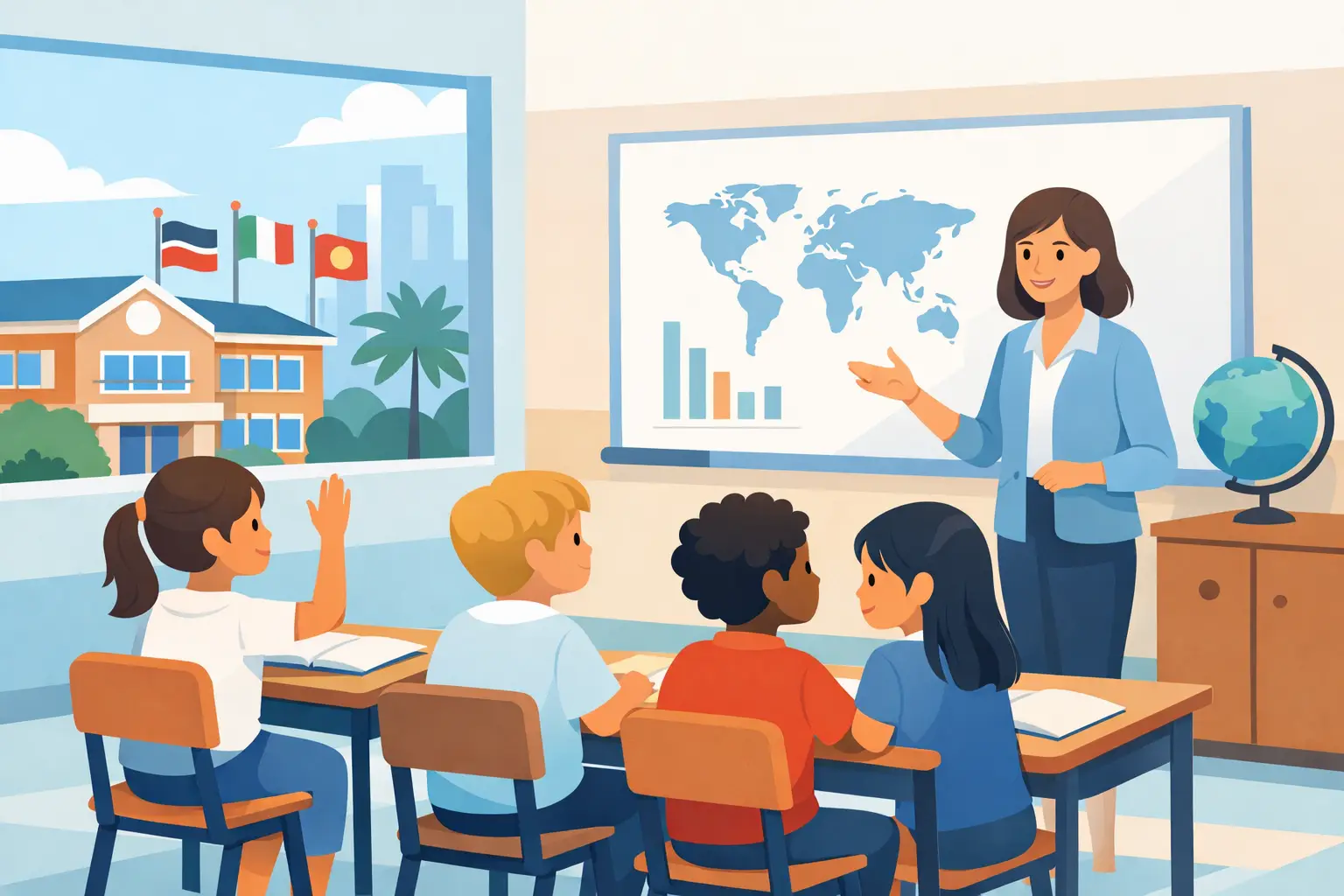
A child who has just arrived in Abidjan, changed countries, or begun learning in English should not have to disappear into the back row. For families seeking a small class sizes international school experience, the real value is not simply a lower number on a class list. It is the confidence that teachers know each student well enough to recognize progress, respond to challenges early, and keep ambition within reach.
At an international school, this level of attention matters at every stage, from a young child adjusting to a new classroom to a high school student preparing for Advanced Placement courses and university applications. Small classes create the conditions for a more personal education, but their impact depends on how teachers use that proximity.
Why small class sizes in an international school matter
International education asks children to do a great deal. They may be adapting to a new country, new classmates, a different academic system, or a new language at the same time. In a large class, even a capable teacher can struggle to give each learner the individual feedback and encouragement they need.
In a smaller class, teachers have more opportunities to listen. They can notice when a student understands the lesson but hesitates to speak, when a new English learner needs another explanation, or when an advanced student is ready for a greater challenge. This is especially meaningful for families who want an American curriculum that develops both strong academic habits and the independence required for global university pathways.
The benefit is not that children are sheltered from expectations. A high-quality small-class environment should maintain high standards. It simply gives each student a clearer route toward meeting them.
More meaningful instruction, every day
Personalized learning is often used as a broad promise. In practice, it begins with details: a teacher who knows how a student approaches a difficult math problem, which texts spark their curiosity, and where they may need to build confidence.
With fewer students competing for attention, teachers can check understanding during the lesson rather than waiting for a test to reveal a gap. They can adjust group work, offer targeted practice, and invite students to explain their thinking. This creates a classroom where assessment is part of learning, not just a final judgment.
For parents, this means conversations about school can become more specific. Instead of hearing only that a child is doing well or needs to improve, families can understand the skills being developed and the next steps that will support growth.
A stronger foundation for English and bilingual growth
Language development cannot be rushed, particularly when a student enters school without strong English skills. Children need repeated opportunities to hear English, use it, make mistakes safely, and receive guidance that helps them progress.
Small classes allow teachers to hear each child’s voice. A student who is quiet during a whole-class discussion may be ready to contribute in a smaller group. A teacher can distinguish between a learner who needs vocabulary support and one who understands the language but needs reassurance to speak.
This is why class size is closely connected to successful language integration. Students can join an international program at different points in their education and still receive the structured support needed to participate fully in academic life. Over time, they build not only English proficiency but also the confidence to communicate, collaborate, and lead across cultures.
The confidence to participate, question, and lead
Academic achievement is strengthened when children feel known and respected. In a smaller classroom, students are less likely to become passive observers. They are more likely to ask a question, contribute to a project, present an idea, and learn from constructive feedback.
That participation matters well beyond the classroom. Universities and future employers look for young people who can think critically, communicate clearly, work responsibly with others, and adapt to unfamiliar situations. These qualities are developed through regular practice, not through a single leadership program or final-year activity.
For younger children, a close classroom community can make the school day feel secure and joyful. For adolescents, it can provide the maturity and accountability needed to take ownership of demanding work. Teachers can challenge students without losing sight of their well-being, character, and individual goals.
Better support during key transitions
School transitions can be demanding for any family. A move to Abidjan, a midyear enrollment, or a shift from another national curriculum can affect a child’s sense of belonging as much as their academic performance.
In a smaller setting, the adjustment is easier to see and support. Teachers can help new students understand classroom routines, connect with peers, and identify areas where previous coursework may differ from the American curriculum. Families receive a more responsive partnership rather than having to wait until concerns become significant.
This does not mean every transition will be effortless. Children need time to settle, and language growth follows its own pace. But close guidance can turn uncertainty into steady progress while preserving a student’s confidence.
Small classes and university preparation
University preparation begins long before Grade 12. It is built through strong reading, writing, problem-solving, organization, and self-advocacy. In high school, these habits become increasingly important as students take advanced courses, explore interests, and plan for competitive university admissions.
A small class can support this process by making feedback more frequent and more useful. Teachers can identify a student’s strengths, help them set realistic but ambitious goals, and encourage them to take the right level of academic challenge. In courses such as AP, where students are expected to manage rigorous college-level material, access to questions and feedback can make a meaningful difference.
Personal attention also helps students develop a fuller sense of direction. University readiness is not only about grades or a diploma. It includes discovering interests, building resilience, communicating effectively, and learning how to seek help when the work becomes demanding.
What parents should look for beyond the number
A low student-to-teacher ratio is valuable, but it should never be the only question parents ask. The quality of the learning experience depends on the school’s curriculum, teacher expertise, safeguarding practices, language support, and culture of high expectations.
When considering a small class sizes international school, families should ask how teachers track progress, how students are supported when they arrive with limited English, and how the school maintains academic challenge for high-achieving learners. It is also worth asking how the school communicates with parents and supports students through transitions.
Small classes work best when they are part of a complete educational model. Students need qualified teachers, a recognized and transferable curriculum, purposeful use of assessment, and an environment where they feel safe enough to take intellectual risks.
At IUDSchool, this approach aligns with an accredited American pathway from PreK through Grade 12, designed to help children grow into capable, bilingual, globally prepared young people. The goal is not merely to help students keep up. It is to give them the support and challenge to move forward with purpose.
A personal education with a global horizon
The right school should make a child feel seen without limiting how far they can go. Small class sizes offer the daily attention that helps students develop strong foundations, recover from setbacks, and take on greater challenges as they mature.
For families in Abidjan, that combination of personal care and international ambition can shape far more than a school year. It can give a child the confidence to enter new rooms, new countries, and future opportunities knowing that their voice has value and their goals deserve serious support.
🐦 Kicau Mania
Nikmati suara burung terbaik setiap hari! Rawat, latih, dan cintai burung kicauanmu.