




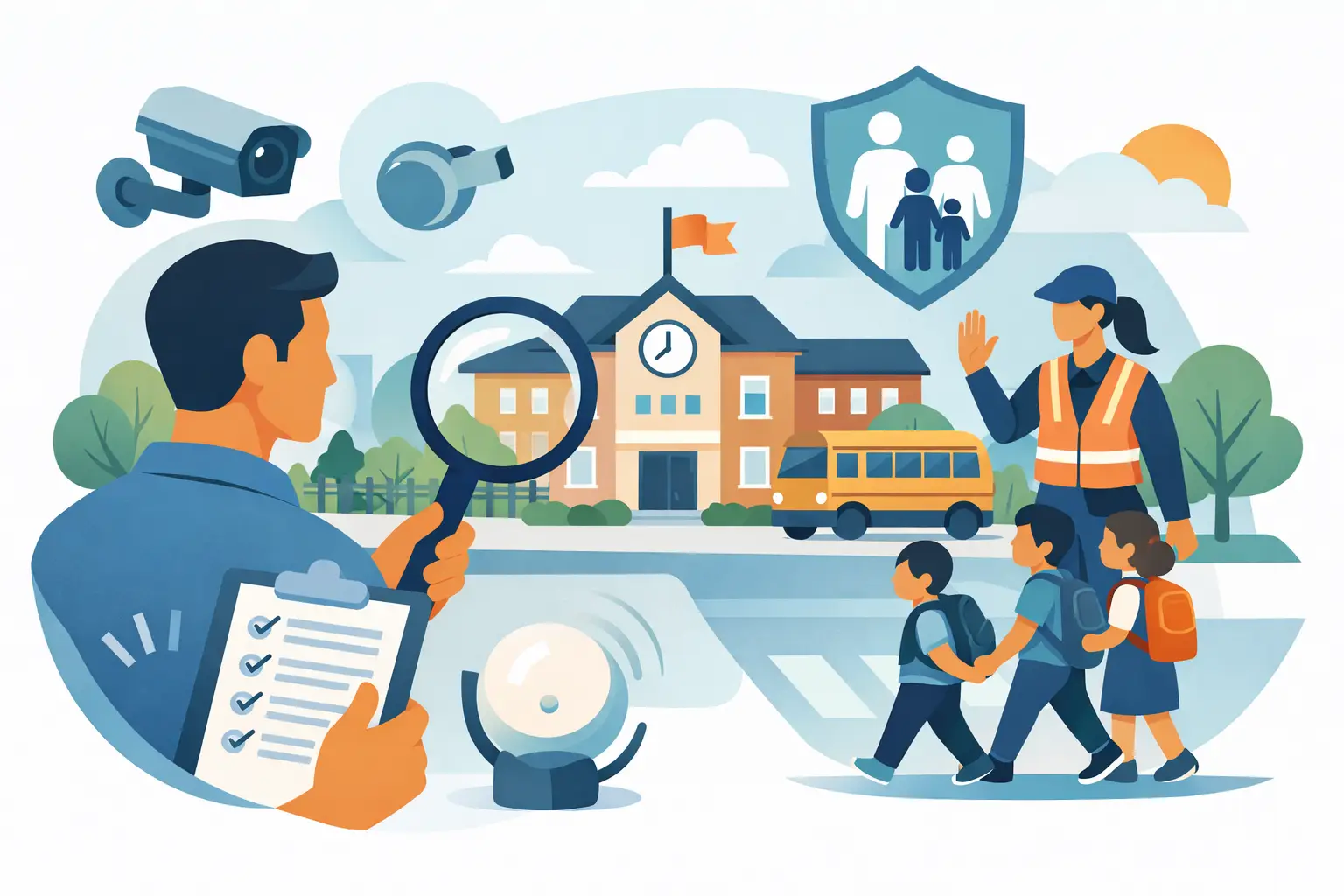
A school tour can reveal far more than classrooms, displays, and facilities. For parents making a major educational decision, knowing how to assess student safety means looking closely at what happens before the first bell, during transitions, in moments of concern, and after a child leaves campus. Safety is not a single gate or policy. It is the daily culture that allows children to learn with confidence, build independence, and thrive.
For families in Abidjan, particularly those seeking an internationally recognized education and a stable pathway from PreK through Grade 12, this assessment deserves the same attention as academic standards, language support, and university preparation. A school should be able to explain its approach clearly, respectfully, and in practical terms.
How to Assess Student Safety Beyond First Impressions
A clean campus and welcoming staff matter, but they are only the beginning. Strong student safety is visible in routines: how visitors are received, how adults monitor arrival and dismissal, how students move between spaces, and how the school responds when plans change.
During a visit, observe whether entry points are controlled without making the environment feel intimidating. Ask how the school confirms who may collect a child, how late arrivals are managed, and what happens when an unfamiliar person requests access. The best systems combine clear procedures with staff who know students and families well.
It is also useful to ask whether security measures are consistent throughout the day. A policy is only effective when it is followed at busy drop-off times, during school events, and when administrators are not standing nearby. Parents should feel comfortable asking for examples rather than accepting general assurances.
Look at arrival, dismissal, and transportation
The beginning and end of the school day are often the most complex moments on campus. Cars, buses, pedestrians, younger children, and staff all share limited space. A school should have an organized system for drop-off and pickup, designated supervision, and a clear process for authorized adults.
For families using school transportation, ask about driver qualifications, vehicle maintenance, seatbelt expectations where applicable, route communication, and adult supervision. The appropriate level of detail may differ according to a child’s age and route, but the school should be prepared to explain how it protects students from the moment they board until they arrive safely.
Ask About Child Protection, Not Just Physical Security
Gates and cameras cannot replace a thoughtful child protection culture. Children need adults who recognize warning signs, listen carefully, respect boundaries, and know how to report concerns. This is especially important in an international school community, where students may be adapting to a new language, country, or social environment.
Parents should ask how staff are recruited and screened, including teachers, assistants, coaches, drivers, and outside providers who work with students. Ask whether employees receive regular training on safeguarding, appropriate professional boundaries, bullying prevention, and reporting procedures. A responsible school will treat these questions as evidence of engaged parenting, not as a challenge to its integrity.
Clarify who leads safeguarding efforts and how a concern is escalated. Families do not need access to confidential case details, but they should understand the reporting pathway and the school’s commitment to timely, appropriate action. Children should also know, in age-appropriate language, which trusted adults they can speak to when something does not feel right.
Notice how adults interact with students
The tone of adult-student interactions often tells parents more than a printed policy. During a visit, notice whether teachers greet children by name, speak calmly, and supervise without unnecessary harshness. Observe whether younger students are supported during transitions and whether older students are treated with both dignity and clear expectations.
A safe school does not confuse discipline with fear. It creates predictable boundaries, fair consequences, and opportunities for students to repair mistakes. This balance helps children develop the judgment, resilience, and character expected of future leaders.
Evaluate Health Care and Emergency Readiness
No school can eliminate every illness, injury, or unexpected event. What distinguishes a prepared school is the quality and speed of its response. Ask whether there is a designated health office, who provides first aid, how medication is stored and administered, and how parents are contacted when a child becomes unwell.
Families should also discuss allergies, chronic health needs, and any individual care plans before enrollment. A school with a personalized approach will seek the information needed to support each child while maintaining appropriate confidentiality. For younger students, clear communication is particularly essential because they may not yet be able to describe symptoms or concerns precisely.
Emergency readiness deserves direct questions as well. Ask how the school prepares for fire, medical emergencies, severe weather, campus disruptions, and other local risks. Find out whether drills occur regularly and how procedures are adapted for preschool children, students with additional needs, or those who are new to English.
The goal is not to hear that a school has every possible answer. Circumstances vary, and no plan can predict every event. The stronger sign is a school that has trained teams, documented protocols, reliable parent communication, and a willingness to review its practices after an incident.
Consider Emotional Safety and Belonging
A child may be physically protected yet still struggle if they feel isolated, excluded, or afraid to ask for help. Emotional safety is central to academic progress, particularly for students entering a new school system or developing confidence in English.
Ask how the school prevents and addresses bullying, including online behavior that affects campus life. The answer should cover more than punishment. Effective approaches teach students how to report concerns, support those affected, address repeated behavior, and restore a respectful learning environment whenever possible.
It is equally valuable to understand how new students are welcomed. International families often arrive during the school year, and children may need time to adjust to new friendships, routines, and expectations. Language integration, small classes, attentive teachers, and counseling support can make a meaningful difference in whether a student feels seen.
At IUDSchool, a student’s ability to join at different stages of the academic year and grow into bilingual confidence reflects an essential safety principle: children learn best when they feel supported, understood, and challenged at the right level.
Review Communication Before You Need It
When a concern arises, parents should not have to guess whom to contact. Ask how the school communicates routine updates, schedule changes, injuries, behavioral concerns, and emergencies. Determine whether messages are timely, whether there is a defined point of contact, and how families who are traveling or living between countries can stay informed.
Good communication is direct without being alarming. It respects privacy while giving parents enough information to make sound decisions for their child. It also invites partnership. Teachers and administrators should be accessible, but communication channels should be organized so that urgent matters receive immediate attention and ordinary questions are answered consistently.
Parents can also ask how student concerns are documented and followed up. A simple conversation may be enough for a minor issue. Patterns involving friendship, behavior, attendance, learning, or well-being require more structured collaboration between school and home.
Questions Worth Asking During a School Visit
Rather than relying on broad questions such as, “Is the school safe?”, ask for practical examples. Four questions can open a more meaningful conversation:
- How do you control campus access and verify authorized pickup?
- What safeguarding training and screening do all adults complete?
- How are parents informed about illness, injuries, emergencies, or serious concerns?
- What support is available when a child experiences bullying, anxiety, or difficulty adjusting?
Listen not only to the answers, but also to how they are delivered. Are they specific? Do staff explain who is responsible? Can they describe how procedures work for children of different ages? Confidence should come from clarity and care, not from vague promises that nothing will ever go wrong.
A school that welcomes these conversations shows respect for families and for the responsibility entrusted to it. Choose the environment where your child is known, protected, encouraged, and prepared to step into a larger world with confidence.
🐦 Kicau Mania
Nikmati suara burung terbaik setiap hari! Rawat, latih, dan cintai burung kicauanmu.