




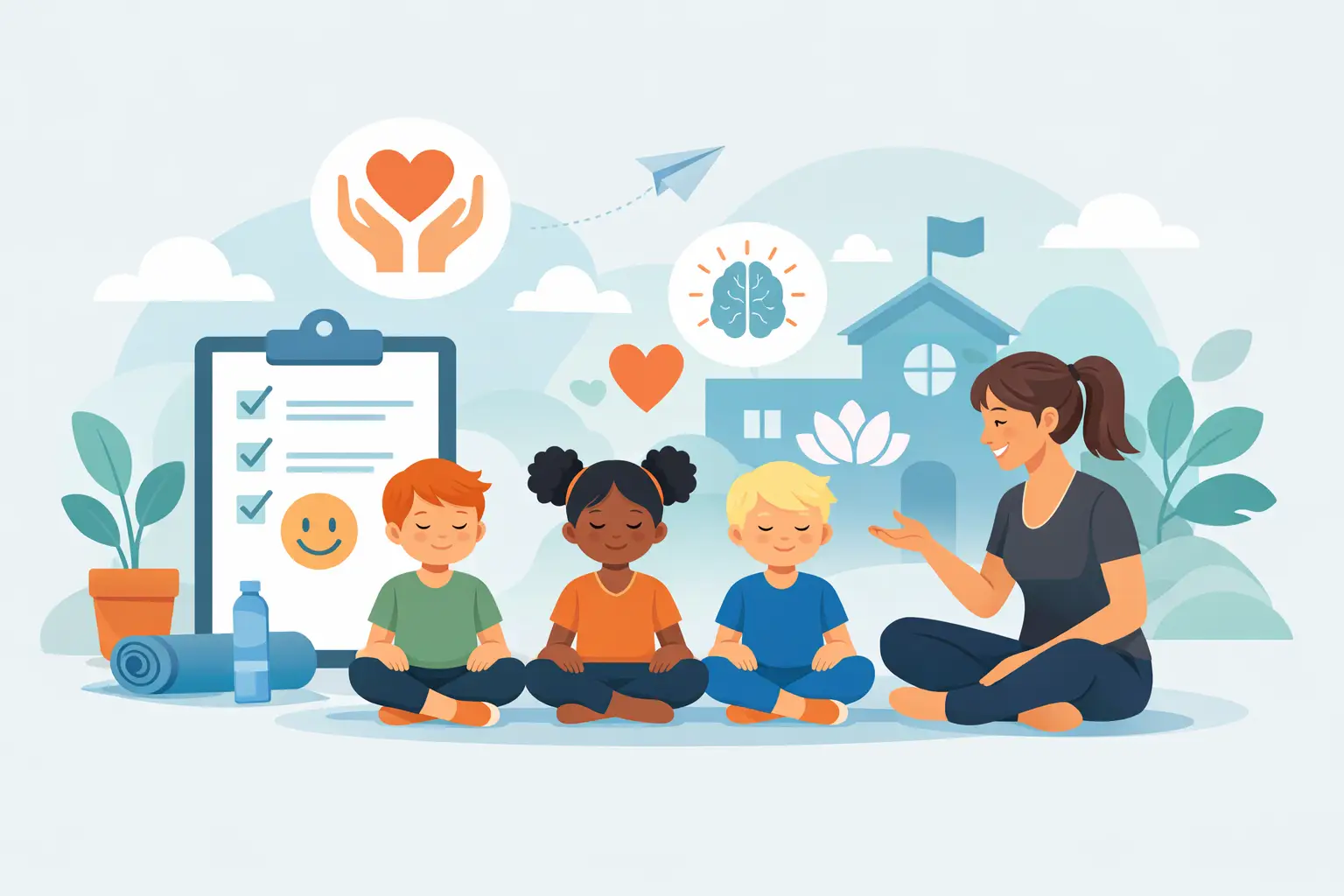
A child who feels safe enough to ask a question, confident enough to try again, and known well enough to ask for help is better prepared to learn. A school wellbeing program for children is not an extra activity added after academics. It is the daily structure that helps children arrive ready to engage, build healthy relationships, and make steady progress in the classroom.
For families choosing an international education in Abidjan, wellbeing also supports continuity. Children may be adapting to a new language, a different curriculum, or a move from another country. The right school environment gives them the emotional security and personalized guidance to turn change into growth.
What a School Wellbeing Program for Children Should Deliver
A meaningful wellbeing program protects the whole child: physical health, emotional balance, social connection, and a sense of purpose. It should be visible in how adults welcome students in the morning, how teachers respond when a child struggles, and how the school helps students resolve conflict respectfully.
This approach does not lower academic expectations. It makes high expectations more attainable. Students are more able to concentrate, participate, and persevere when they feel secure and supported. For younger children, that may mean learning to name feelings, take turns, and recover from disappointment. For older students, it includes managing pressure, setting goals, communicating effectively, and making responsible decisions.
A strong program also recognizes that children do not develop at the same pace. A student who is quiet may need time and reassurance before speaking in class. Another may be highly confident socially but need support with organization or self-regulation. Personalized attention helps educators understand the child behind the behavior or the grade.
Safety Is the Starting Point for Learning
Parents rightly expect a school to provide a physically safe campus. Yet a child’s sense of safety goes further. It includes knowing where to go when something feels wrong, trusting that adults will listen, and understanding that mistakes can be addressed without humiliation.
Clear routines are particularly valuable for children entering a new school. Consistent arrival procedures, classroom expectations, supervised transitions, and age-appropriate safeguarding practices reduce uncertainty. When routines are predictable, children can devote more energy to learning and connecting with others.
Emotional safety matters just as much. Students need classrooms where questions are welcomed, diverse backgrounds are respected, and unkind behavior is addressed promptly. In an international school community, this includes helping children appreciate different languages, cultures, family experiences, and perspectives. Respect becomes a daily practice, not simply a statement on a wall.
Wellbeing and Academic Excellence Belong Together
There is a false choice between rigorous academics and student wellbeing. In reality, sustained achievement requires both. A demanding American curriculum asks students to read closely, solve problems, present ideas, collaborate, and think independently. These skills grow more effectively when students have the confidence to participate and the resilience to learn from feedback.
Teachers play a central role. They can notice changes in a student’s engagement, encourage realistic goal setting, and offer appropriate support before a small concern becomes a larger barrier. Regular communication with families creates a fuller picture of the student’s needs at home and at school.
The balance is important. Children should be challenged, but not left to navigate challenges alone. Productive struggle is part of learning; persistent anxiety, isolation, or overwhelm should prompt timely attention. The goal is not to remove every difficulty. It is to give students the tools, relationships, and structure to meet difficulty constructively.
Supporting Children New to English
For students joining an English-language school without a strong foundation in English, wellbeing and language learning are closely connected. A child may understand a concept in mathematics or science but initially lack the words to express that understanding in English. If this gap is misunderstood, the child can begin to doubt their abilities.
Language integration should protect a student’s confidence while building practical skills. Visual supports, patient modeling, peer connection, and targeted instruction help students participate from the start. Celebrating progress matters, whether it is contributing a first sentence in class or confidently completing a presentation months later.
Families should look for a school that sees multilingualism as an asset. Becoming bilingual can expand a child’s academic, cultural, and future professional opportunities, but the transition requires thoughtful guidance and encouragement.
The Daily Habits That Build Stronger Students
Wellbeing is shaped less by one annual event than by repeated daily experiences. Age-appropriate check-ins can help teachers understand how students are arriving emotionally. Classroom conversations can teach listening, empathy, and respectful disagreement. Physical activity, nutrition awareness, rest, and opportunities for play contribute to energy and focus.
For adolescents, wellbeing education should also address the realities of growing independence. Students benefit from learning how to manage time, respond to social pressure, use technology responsibly, and seek help early. These are not separate from preparation for university and adult life. They are part of it.
A school should avoid treating wellbeing as a one-size-fits-all formula. Some children thrive through group activities and leadership roles. Others need quiet encouragement, a trusted adult, or a carefully planned transition into a new setting. Effective support is consistent, but it is never impersonal.
Partnership With Parents Makes Support More Effective
Parents know their children deeply. Teachers see how they learn, interact, and respond to challenges in a school setting. When these perspectives are shared respectfully, children receive more coherent support.
Useful school-parent communication is specific and timely. Rather than only reporting grades, it can address participation, friendships, confidence, routines, and developing strengths. A family may share that a child is adjusting after a move, experiencing a change at home, or feeling nervous about speaking English. This context allows the school to respond with greater care.
At home, parents can reinforce wellbeing without creating extra pressure. Simple habits make a difference: asking open questions about the school day, protecting sleep routines, recognizing effort as well as outcomes, and encouraging children to talk through setbacks. If concerns persist, early conversation with the school is usually more helpful than waiting for a report card or a major incident.
How to Evaluate a Child’s Wellbeing at School
When visiting a school, parents can often see wellbeing in the details. Observe how adults speak to students, how students treat one another, and whether classrooms feel organized without feeling rigid. Ask how new students are welcomed, how concerns are communicated, and what support is available when a child is struggling socially, emotionally, or academically.
It is also worth asking how the school measures progress beyond test results. Academic data matters, especially for families seeking a globally recognized pathway to university. But evidence of growth can also include increased participation, stronger self-management, improved communication, and a student’s willingness to take on new challenges.
At IUDSchool, a globally minded American education is designed around both ambition and care. From PreK through Grade 12, students need a setting that expects them to grow while giving them the guidance to do so with confidence, character, and a clear sense of belonging.
The most valuable question for a family is not simply whether a school offers a wellbeing program. It is whether their child will be seen, challenged, protected, and encouraged there every day. When the answer is yes, children gain more than a positive school experience. They gain the foundation to become capable, compassionate future leaders.
🐦 Kicau Mania
Nikmati suara burung terbaik setiap hari! Rawat, latih, dan cintai burung kicauanmu.