




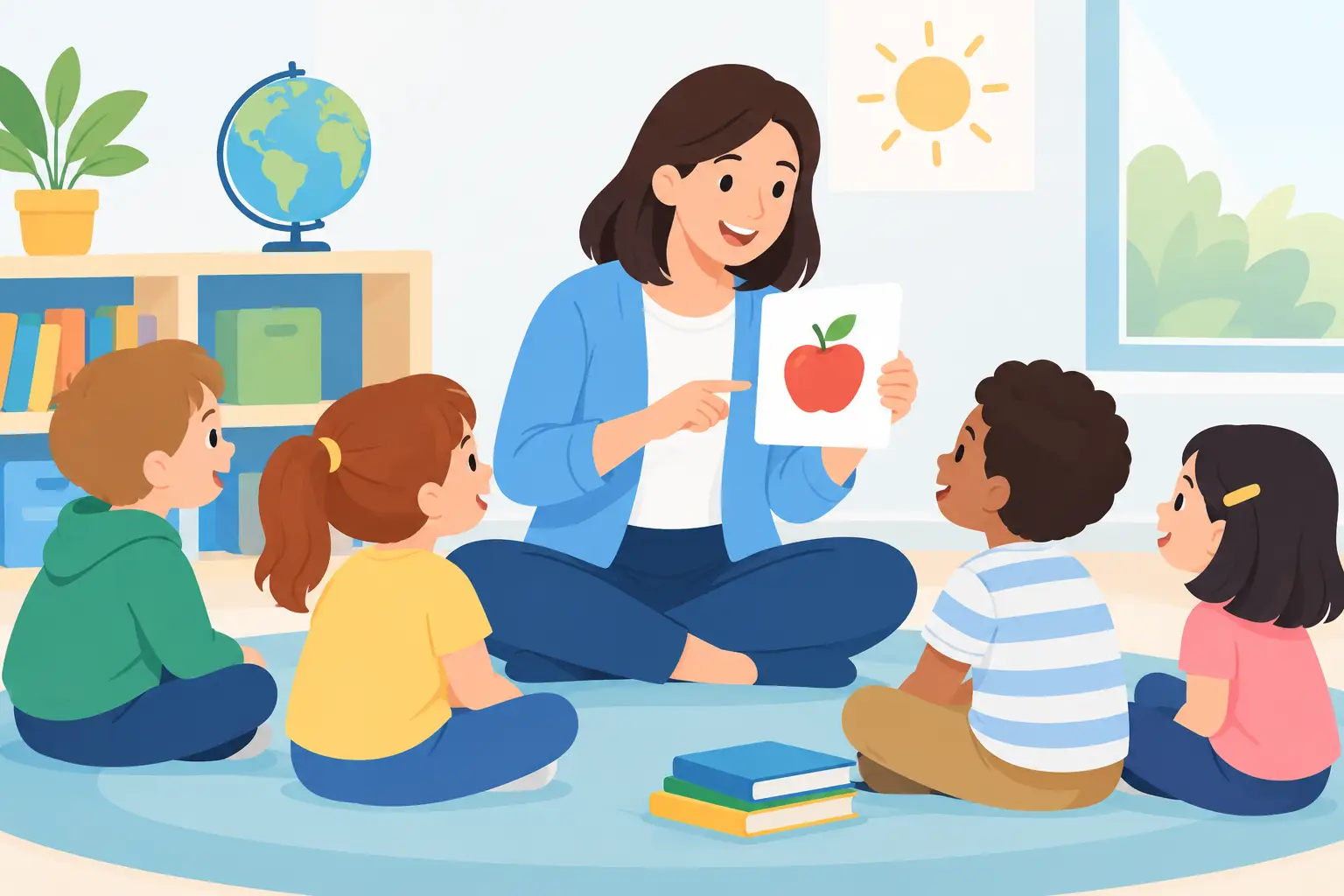
A preschooler who begins school with little or no English may be quiet at first. Within a few weeks, however, many parents notice a new word at breakfast, a song repeated in the car, or a simple request made confidently in English. So, can preschoolers learn English quickly? They can make remarkable progress when English is part of a warm, consistent, and purposeful school experience.
For families in Abidjan planning an international education, the question is not only how fast a child can learn. It is whether the child will feel secure enough to speak, supported enough to make mistakes, and challenged enough to keep growing. Early English learning succeeds when those conditions come together.
Can Preschoolers Learn English Quickly Through Immersion?
Yes, but “quickly” should be understood in the right way. Preschool children often absorb the sounds, rhythm, and everyday vocabulary of a new language faster than older learners. Their brains are highly receptive to language patterns, and they are not usually concerned with perfect grammar before they try to communicate.
A child may understand classroom routines well before speaking in full sentences. They might follow instructions such as “wash your hands,” “choose a book,” or “line up,” then begin answering with a word, a gesture, or a short phrase. This silent or listening period is normal. It is not a sign that learning has stopped. In many cases, it is the foundation for a confident burst of spoken language later.
Immersion does not mean leaving a child to figure everything out alone. Effective immersion is carefully designed. Teachers use facial expressions, visuals, demonstrations, repetition, music, stories, and predictable routines so that children understand the meaning behind the words. The classroom becomes a place where English is useful, joyful, and connected to real relationships.
Why the Preschool Years Offer a Powerful Start
Young children learn language through participation. They learn when they build a tower with a classmate, ask for more paint, listen to a story, or sing the same welcome song each morning. These small interactions happen repeatedly, giving English a clear purpose.
At this age, children are also less likely to fear mistakes. A preschooler may say “I goed outside” and continue playing without embarrassment. That willingness to experiment is a major advantage. Rather than correcting every sentence, skilled teachers model the natural form: “Yes, you went outside.” The child hears accurate English while feeling encouraged to keep communicating.
Pronunciation can develop especially well during the early years because children are still attuned to new sounds. Still, families should not measure progress only by accent or by the number of words a child repeats at home. Genuine progress includes understanding instructions, joining group activities, expressing needs, making friends, and gradually using English independently.
What Determines How Fast a Child Progresses?
Every child’s path is different. Some begin speaking English within a few months. Others spend longer observing, listening, and building trust before they use many words aloud. Both patterns can be healthy.
The amount of meaningful exposure matters. A child who hears English for several hours each school day, in routines that are easy to understand, has more opportunities to connect words with actions and experiences. Small classes and attentive teachers also make a difference because children receive more individual conversation, reassurance, and feedback.
A child’s personality matters, too. An outgoing child may begin speaking early, even with imperfect vocabulary. A thoughtful or shy child may understand a great deal before contributing verbally. Comparing children can create unnecessary pressure. The better question is whether the child is making steady gains in comprehension, participation, and confidence.
Previous experience with more than one language can also help. Children who regularly hear French alongside a local language, or who have moved between countries, already understand that people can communicate in different ways. They may be particularly ready to accept English as another meaningful part of their world.
A Safe Classroom Comes Before Confident Speech
Language learning is emotional as well as academic. A preschooler cannot focus on new words if they feel frightened, overlooked, or unsure of what will happen next. The quality of care around the learning experience is therefore essential.
A strong early learning environment offers clear routines, kind boundaries, consistent adults, and opportunities to play. Teachers pay close attention to how each child enters the group, responds to separation from family, and connects with peers. They use encouragement without forcing performance.
This approach is especially valuable for children joining a new school during the year or arriving from a French-speaking environment. They do not need to prove English proficiency before they belong. They need a structured entry point, patient guidance, and daily evidence that they are understood.
At IUDSchool, language integration is designed to help students enter an American educational pathway at different stages of English development. For preschoolers, that support begins with a caring environment where communication, social development, and early academic habits grow together.
What English Learning Looks Like in a Strong Preschool Program
The most effective preschool English instruction rarely feels like a formal language lesson. It is woven into the day. Children hear vocabulary during arrival, circle time, art, outdoor play, meals, and story time. Because words return in different contexts, they become familiar and usable.
Storytelling plays a central role. A teacher can read a picture book, pause to point at images, invite children to predict what happens next, and repeat key phrases. Over time, children begin to supply those phrases themselves. Songs and rhymes are equally valuable because repetition helps children remember language naturally while enjoying the rhythm of the group.
Play creates another important bridge. In a pretend grocery store, a child may practice “I want apples.” At a construction table, they may hear “big,” “small,” “under,” and “next to.” During a disagreement over a toy, they learn practical phrases such as “my turn” and “can I have it?” This is not incidental learning. It is language connected directly to social problem-solving and independence.
Early literacy should be introduced thoughtfully as well. Children benefit from hearing sounds in words, recognizing their names, exploring letters, and developing a love of books. But speaking and understanding should not be rushed in favor of worksheets. At preschool age, curiosity, conversation, and positive associations with reading create a stronger base for future academic success.
How Parents Can Support English at Home Without Pressure
Parents do not need to turn the home into a second classroom. The goal is to show children that English is useful and enjoyable beyond school. Read a short English picture book together, listen to familiar songs, or ask simple questions about their day. If the child answers in French at first, respond warmly and keep the exchange going.
Protecting the family’s home language is equally important. A strong foundation in French or another first language supports overall communication, identity, and later literacy. Children do not need to abandon one language to gain another. With consistent exposure and support, multilingualism can become a lasting strength.
Avoid testing a child after school with repeated requests to “say something in English.” Preschoolers often need time to rest and reconnect with family. Instead, notice natural moments: a color named during play, a line from a song, or a new phrase used with a sibling. Praise effort and curiosity rather than perfection.
When Families Should Expect More Support
Most preschoolers adjust well to English immersion, but some need additional time or individualized attention. A child may be coping with a recent move, separation anxiety, a change in family routine, or developmental differences that affect communication. In these situations, close partnership between parents and teachers is vital.
Families should ask how the school observes language development, communicates progress, and adapts support for children who are new to English. A reassuring program will have clear answers. It will recognize the difference between normal adjustment and a concern that needs further assessment, while treating each child with dignity.
The long-term value of early English learning is not limited to vocabulary. A child who learns to enter a new language community develops adaptability, empathy, confidence, and readiness for an international academic journey. Those qualities will matter in kindergarten, through high school, and well beyond the classroom.
For parents, the most encouraging sign is often not a flawless English sentence. It is the moment a child walks into school feeling safe, eager to participate, and ready to make their voice heard.
🐦 Kicau Mania
Nikmati suara burung terbaik setiap hari! Rawat, latih, dan cintai burung kicauanmu.