




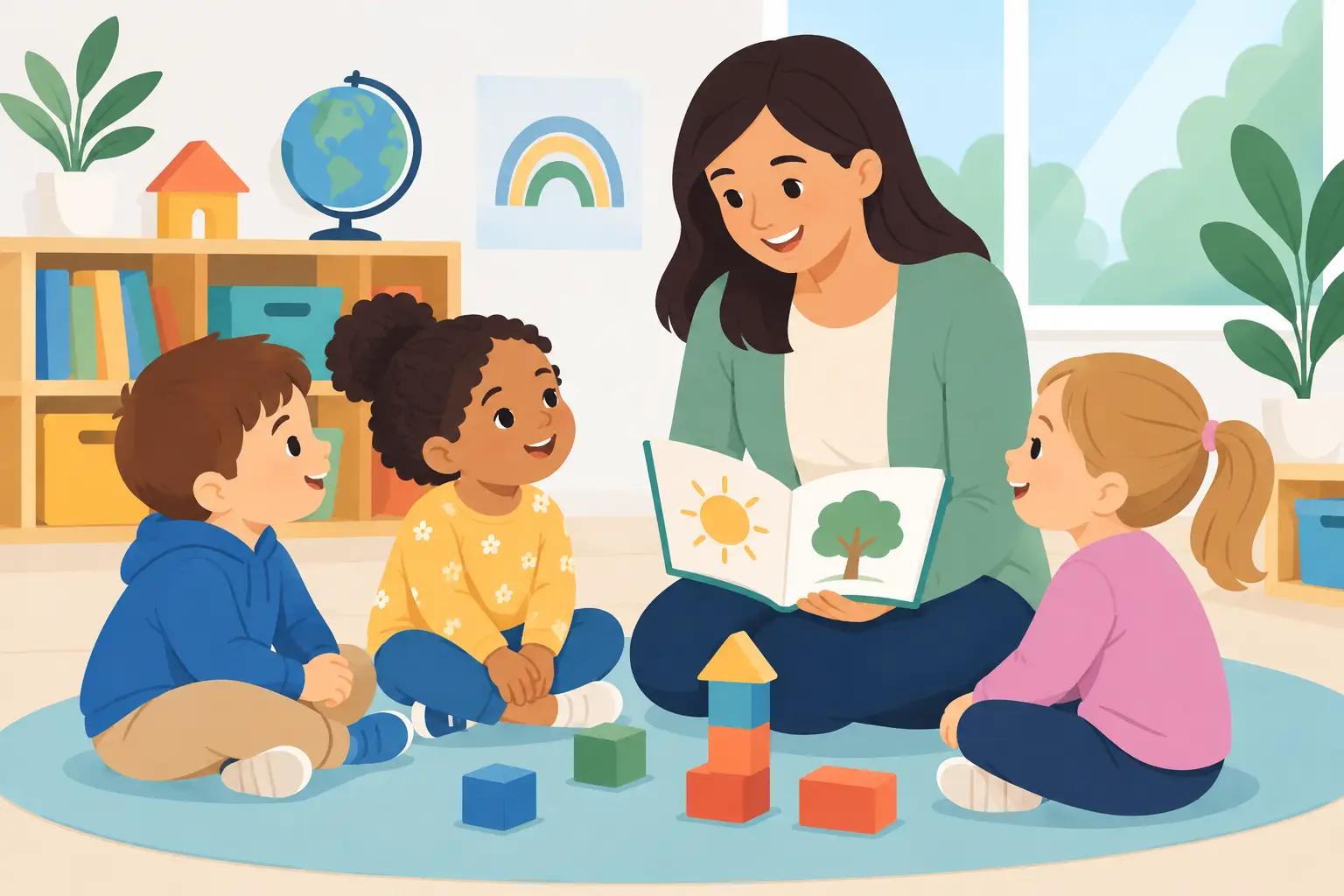
A child may be eager to carry a backpack and meet new friends long before a parent feels ready to let go. When families begin comparing early-learning options, preschool age requirements are often the first practical question – but the most valuable answer involves more than a birthday. It also involves your child’s developmental stage, confidence, language needs, and the kind of classroom experience that will help them feel safe enough to learn.
For internationally minded families in Abidjan, preschool can be the beginning of a long academic journey. Choosing the right starting point gives children more than an early introduction to letters and numbers. It helps them develop the routines, curiosity, communication skills, and sense of belonging that support future success.
What Are the Typical Preschool Age Requirements?
Most preschool programs welcome children between ages 3 and 4, while pre-kindergarten programs commonly serve children who are 4 and approaching kindergarten. The exact age requirement depends on the school’s grade structure and its annual cutoff date. A school may require a child to be a certain age by August 31, September 1, or another date before the school year begins.
In an American curriculum, early childhood classes may be labeled Preschool, PreK 3, PreK 4, or Pre-Kindergarten. These names can sound similar, yet they often reflect meaningful differences in the daily program and developmental expectations. A PreK 3 classroom, for example, generally emphasizes guided play, social language, movement, and early independence. PreK 4 typically adds more structured preparation for kindergarten, including foundational literacy and numeracy.
Because age cutoffs vary, parents should not rely only on a child’s age in months. Ask how the school places students, whether admission is possible during the academic year, and what records are required. Birth certificates, immunization documentation, prior school information when applicable, and a family meeting are common parts of the enrollment process.
Age Is Only One Part of Readiness
A child who meets the stated age requirement is eligible to apply. That does not mean they must already read, write their name perfectly, or speak English fluently. A high-quality preschool is designed to teach the skills children are still developing.
Readiness is better understood as a combination of growing abilities. Can your child spend brief periods with another trusted adult? Are they beginning to communicate needs, participate in simple routines, and show interest in other children? Can they recover from small frustrations with support? These are useful signals, but they are not a pass-or-fail test.
Children develop unevenly, especially between ages 3 and 5. One child may have strong language skills but need time to separate from a parent. Another may be socially confident but still working on fine motor tasks such as holding crayons or opening a lunch container. The right program recognizes these differences and offers patient, consistent guidance rather than expecting every child to arrive at the same point.
Independence grows in the classroom
Parents sometimes worry about toileting, feeding, dressing, or following directions. Schools may have specific policies around toileting, so it is sensible to ask directly before enrollment. Beyond that practical requirement, children do not need complete independence to begin preschool.
A nurturing classroom helps children practice small responsibilities: putting away materials, washing hands, asking for help, taking turns, and managing transitions. These daily moments build confidence. A child learns that they can try, make mistakes, and try again within a secure environment.
Why the School’s Cutoff Date Matters
The cutoff date determines which age group your child will join and can shape the pace of their first years in school. A child who turns 4 shortly after the cutoff may be among the younger students in a class, while a child with an earlier birthday may be among the oldest. Neither position is automatically better.
For some younger children, joining an age-appropriate class encourages social growth and keeps learning exciting. For others, an additional year in a play-based early-learning setting can provide time to mature emotionally and physically before kindergarten. The best decision depends on the child, the family’s plans, and the support available at school.
This consideration is especially relevant for mobile families. A move from another country or school system can create confusion because grade labels and entrance ages differ. Rather than trying to force a match based on a class name alone, families should look at the child’s birth date, previous educational experience, and likely next step in the curriculum. A school admissions team can help map a placement that protects continuity in a child’s education.
Starting Preschool Without English Fluency
For many international families, language is the concern behind the age question. Parents may wonder whether a child should wait to start until they understand English. In most cases, waiting is unnecessary when the school has meaningful language support and teachers experienced in early childhood development.
Young children learn language through relationships, repetition, songs, stories, play, and daily routines. They do not need to understand every instruction on the first day to begin participating. A warm teacher, visual cues, predictable routines, and opportunities to interact with peers can make a new language feel approachable rather than intimidating.
The goal is not to pressure a child into speaking immediately. It is to create enough safety and encouragement that language develops naturally. At IUDSchool, students can join at different stages of English proficiency and receive support as they grow toward bilingual confidence. For a young child, this early exposure can become a lasting advantage in an internationally recognized American education pathway.
What to Look for Beyond Preschool Age Requirements
Once your child qualifies by age, look closely at what happens during the school day. The early years deserve the same careful attention as later academic stages because children are forming their first ideas about school, friendship, challenge, and their own abilities.
A strong preschool environment balances structure with play. Children need routines that make the day predictable, but they also need time to explore, create, ask questions, and move. Academic foundations should be present through purposeful activities, not through pressure that turns learning into a performance.
Parents should also consider class size, teacher attention, health and safety practices, communication with families, and the emotional tone of the classroom. Does the school see behavior as communication? How are new students welcomed? How do teachers help children who are shy, highly active, or adjusting to a new language? These questions reveal whether a program is prepared to support the whole child.
A visit can clarify the decision
A school visit often tells families more than a brochure can. Notice whether children appear engaged and comfortable. Observe how adults speak to them, how transitions are handled, and whether the classroom feels organized without being rigid.
Bring practical questions to the conversation: What is the cutoff date? Is enrollment available during the year? What does the first week look like for a new preschooler? How does the school communicate progress and concerns? Clear, thoughtful answers are a sign that the school values partnership with parents.
Helping Your Child Prepare for Their First Day
Preparation should feel reassuring, not like a training program. In the weeks before school begins, talk positively and specifically about what your child can expect: a teacher, new friends, a snack, stories, outdoor play, and a parent returning after the school day. If possible, visit the campus together so the setting becomes familiar.
Practice a few simple routines at home, such as putting on shoes, opening a water bottle, washing hands, and saying goodbye to a caregiver. Read books about starting school and give your child chances to name their feelings. Excitement and nervousness can exist at the same time, and both are normal.
On the first morning, a calm, confident goodbye is usually kinder than a long farewell. Children take cues from the adults they trust. When parents and teachers work together with patience, a child can move from uncertainty to confidence one small routine at a time.
The right preschool start is not defined by reaching every milestone early. It begins when your child is welcomed into an age-appropriate, caring environment that sees who they are now and gives them room to become who they can be.
🐦 Kicau Mania
Nikmati suara burung terbaik setiap hari! Rawat, latih, dan cintai burung kicauanmu.