




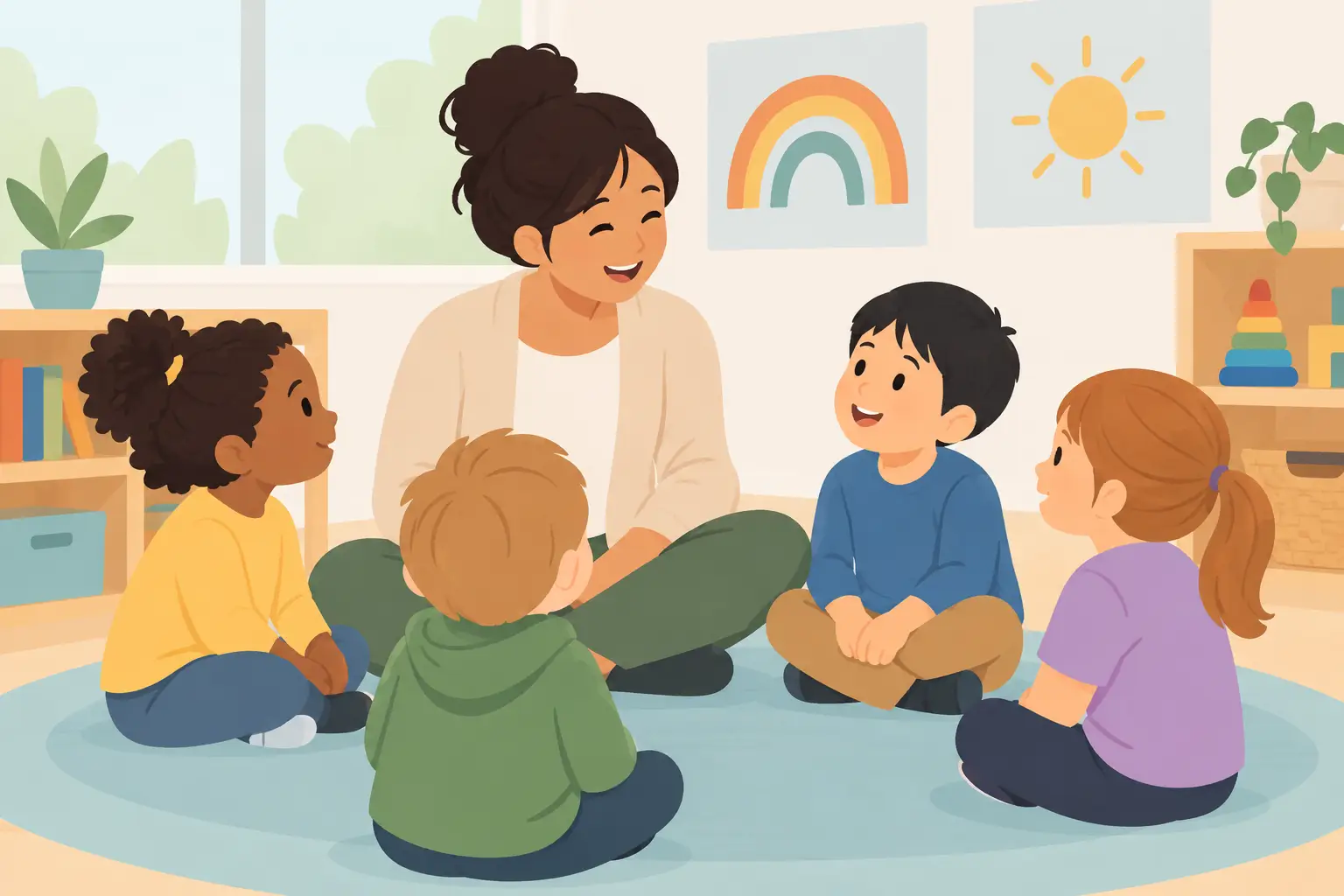
A child’s first school morning can be full of small, meaningful moments: a new backpack, an unfamiliar classroom, a teacher’s warm greeting, and classmates speaking words they may not yet understand. For families choosing an international education in Abidjan, preschool language learning is not simply about teaching English vocabulary. It is about helping a child feel secure enough to communicate, participate, and discover that school is a place where they belong.
For young children, language develops through relationships. They learn when a trusted adult repeats a phrase during play, when a friend invites them to build with blocks, and when a familiar song gives them the courage to join in. A high-quality preschool program turns these everyday interactions into a thoughtful foundation for bilingualism, academic readiness, and lifelong confidence.
Why preschool language learning matters early
The preschool years are a particularly receptive period for language development. Children are naturally attentive to sounds, facial expressions, rhythm, and repetition. They do not need to begin with grammar rules or memorized word lists. They need meaningful reasons to listen, respond, ask, and try again.
This matters especially for children entering an English-language school without prior English exposure. A supportive early-learning environment can help them connect new English words to actions, objects, stories, routines, and emotions. “Wash hands,” “my turn,” “I need help,” and “look at the red ball” become useful language because children experience their meaning immediately.
Early exposure also supports skills that reach well beyond speaking. As children listen to stories, follow directions, sing, describe pictures, and talk through a problem with peers, they strengthen attention, memory, social awareness, and early literacy. These abilities support future learning in every subject.
Parents should remember, however, that early language learning is not a race. A child who is quiet in the first weeks may be listening carefully and building understanding before speaking. This silent period is common, particularly for children acquiring a new language. Progress should be measured through growing comfort, participation, comprehension, and willingness to engage, not only by the number of English words a child can say.
Preschool language learning should feel natural
The strongest preschool language experiences are woven into the day rather than separated into a single lesson. Young children learn best when language has a clear purpose. A teacher may introduce new words while preparing a snack, caring for a class plant, painting a family portrait, or organizing a pretend grocery store.
Play is especially valuable because it gives children ownership. In dramatic play, a child may practice greetings as a shopkeeper, use food names in a restaurant, or negotiate roles in a family game. In the block area, children learn language for size, shape, position, planning, and cooperation. Even when children use gestures at first, they are developing the confidence to take part in a shared conversation.
Stories and songs add another essential layer. Repeated read-alouds allow children to anticipate language and gradually join in. Rhymes build awareness of sounds, while songs create a joyful, low-pressure way to practice pronunciation and rhythm. The goal is not perfect accent or immediate fluency. The goal is a child who sees language as a tool for friendship, expression, and learning.
A balanced approach respects the home language
For many families in Abidjan, children grow up hearing French, English, and one or more local or family languages. This is an advantage. A strong home language gives children a base for thinking, storytelling, emotional expression, and later literacy.
Learning English at school does not require families to stop using French or another home language at home. In fact, parents are encouraged to speak the language in which they can be most expressive and responsive. Rich conversations at home help children develop concepts that transfer across languages. A child who can explain a favorite memory, ask thoughtful questions, and enjoy books in French is building skills that will support English development as well.
The right balance depends on the child and family. Some children will switch comfortably between languages; others may use one language at home and another at school for a time. What matters is that every language is treated with respect and that the child never feels that communicating with family is in conflict with succeeding at school.
What effective language support looks like
An international preschool should provide more than English immersion. Immersion works best when it is intentional, warm, and tailored to each child’s starting point. Children need adults who observe closely, use clear language, repeat key ideas naturally, and celebrate every step forward.
Small classes can make a real difference. They allow teachers to notice whether a child understands a routine, needs a visual cue, prefers to observe before joining a group, or is ready for a more challenging conversation. Personalized support is particularly reassuring for families arriving from another school system or relocating during the academic year.
Effective classrooms also make language visible. Labels, picture schedules, gestures, real objects, and demonstrations help children connect words with meaning. A teacher might show a child how to put away materials while saying the steps aloud, then invite the child to try. This approach reduces frustration and gives children the confidence to become independent.
Assessment at this age should be gentle and practical. Rather than relying on formal tests, educators can track how a child responds to directions, interacts with peers, retells a story, recognizes sounds, and expresses needs. These observations help teachers adjust instruction while helping parents understand growth in concrete terms.
The emotional foundation comes first
Children do not learn language well when they feel anxious, isolated, or afraid of making mistakes. Safety and belonging are not separate from academic progress. They are the conditions that make it possible.
A caring preschool team creates predictable routines so children know what comes next. They greet each child by name, model kind interactions, and provide patient reassurance when words are difficult. They also create opportunities for peer connection, because children often take their bravest language risks with friends.
For a child new to English, success may begin with pointing to a preferred activity, responding to a familiar song, or joining a group game. These moments deserve recognition. As confidence grows, children begin to use single words, then short phrases, then more complex ideas. The process is gradual, but it is powerful.
At IUDSchool, this kind of early integration can give children a confident entry into an American educational pathway while honoring their individual needs. The aim is not only for children to learn English, but to become active, capable members of a learning community from their earliest years.
How parents can support language growth at home
Parents do not need to recreate school at the kitchen table. The most useful support often comes from calm, consistent conversations during ordinary family life. Ask your child about a picture they drew, describe what you are cooking together, or invite them to tell a story about their day in the language that feels most comfortable.
Reading together is one of the most valuable habits a family can build. Choose books your child enjoys and revisit favorites often. Pause to ask what they notice, what they think might happen next, or how a character feels. If your child answers in French, English, or a mix of both, respond with encouragement. The conversation matters more than a perfect response.
It also helps to stay connected with teachers. Share information about the languages your child hears at home, favorite interests, personality, and any changes that may affect adjustment. When home and school understand each other, children receive more consistent support.
Avoid placing pressure on a child to perform in English for relatives or visitors. Language develops more confidently when children feel that mistakes are normal. Curiosity, patience, and positive attention will take them much further than correction at every turn.
A beginning with global possibilities
Preschool is where children form some of their earliest beliefs about themselves as learners. When they experience language as welcoming rather than intimidating, they are more likely to raise their hand, make friends across cultures, and approach new challenges with confidence.
For internationally minded families, that beginning has lasting value. A child who learns to listen, communicate, and belong in more than one language is gaining more than vocabulary. They are developing the openness, resilience, and academic readiness that can carry them through school and toward a future without borders.
The right preschool environment gives every child time, structure, and encouragement to find their voice. That voice may begin quietly, but with skilled guidance and a caring community, it can grow into something remarkable.
🐦 Kicau Mania
Nikmati suara burung terbaik setiap hari! Rawat, latih, dan cintai burung kicauanmu.