




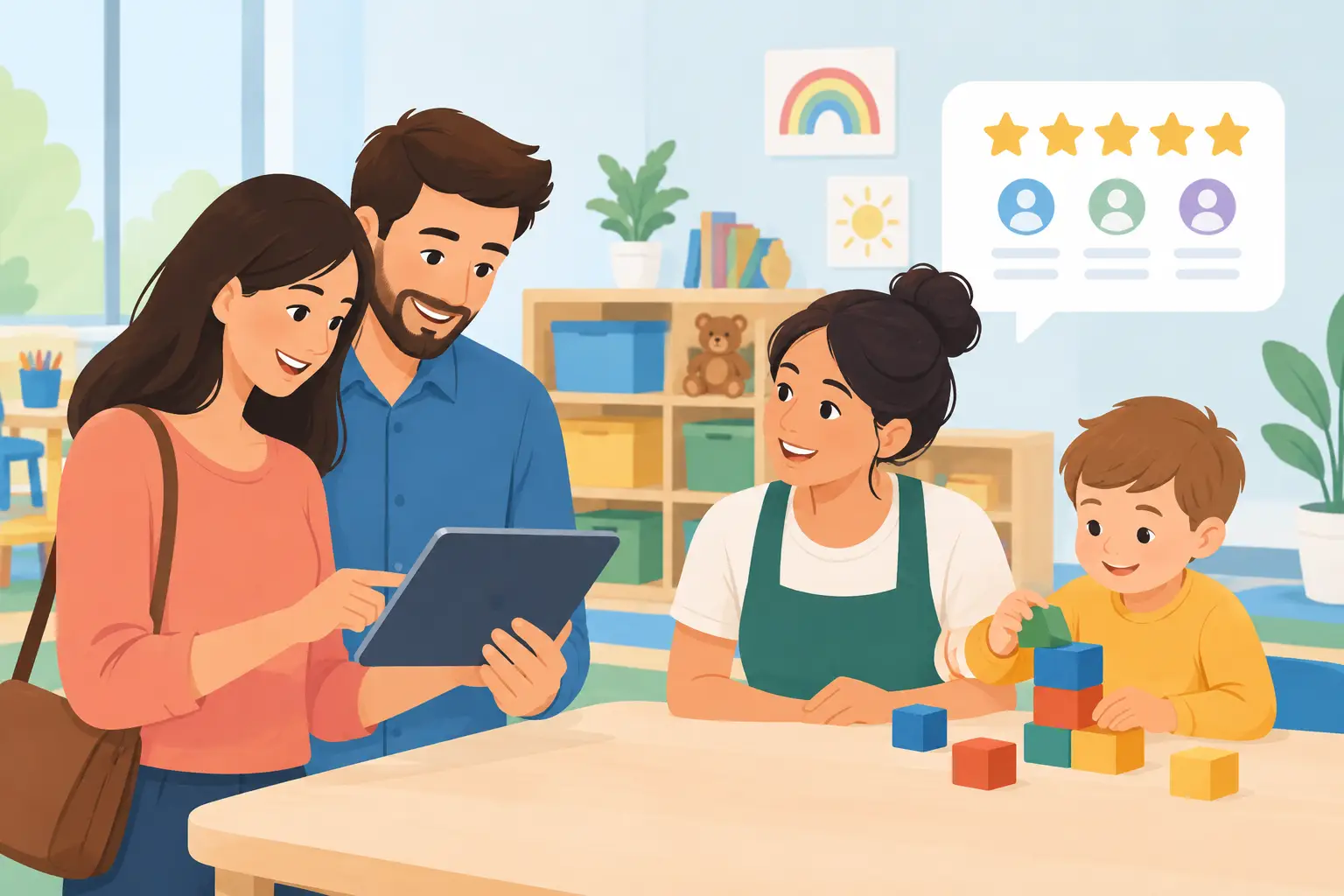
A preschool visit can feel reassuring: bright classrooms, smiling teachers, colorful displays, and a warm welcome. But preschool program reviews often reveal what a short tour cannot: how a school communicates when a child is upset, how it supports new English learners, and whether its daily routines truly help young children feel secure enough to learn.
For families in Abidjan planning an international educational path, the preschool decision is more than an early childcare choice. It is the beginning of a child’s relationship with school, language, friendships, confidence, and curiosity. Reviews can be useful evidence, but they should be read with the same care parents bring to every major decision about their child.
What Preschool Program Reviews Can Tell You
The most helpful reviews are specific. A parent who says, “My child was welcomed patiently despite arriving with little English,” gives far more meaningful information than a simple five-star rating. Details help families understand how a program operates when real needs arise.
Look for repeated comments about teacher attentiveness, classroom routines, safety procedures, communication with families, and a child’s adjustment over time. When several families independently describe teachers as responsive, nurturing, and organized, that pattern is worth considering. The same applies when reviews repeatedly mention concerns such as frequent staff changes, unclear communication, or children who seem anxious at drop-off without appropriate support.
Still, a review is one family’s experience at one point in time. Preschool children have different temperaments, and family expectations can vary widely. A program that is an excellent fit for a highly independent child may require a more gradual transition plan for another. Use reviews to prepare better questions, not to replace your own judgment.
Read Beyond the Star Rating
A high rating can signal satisfaction, but it cannot explain why parents are satisfied. Read the comments closely and focus on the experiences that matter most for your family’s priorities.
If your child is entering an English-language environment for the first time, pay particular attention to reviews that discuss language support. Young children can become bilingual remarkably quickly when they are surrounded by caring adults, engaging activities, and predictable routines. Yet immersion should never mean leaving a child to struggle alone. Strong programs help children participate from their first day through visual cues, patient modeling, repetition, peer interaction, and individualized encouragement.
Safety comments deserve equal attention. Parents may describe secure arrival and dismissal procedures, supervision on the playground, nurse access, cleanliness, or how staff respond to minor illnesses and injuries. A school does not need to publicize every operational detail in a review, but families should come away with confidence that children are known, supervised, and cared for thoughtfully.
Also notice how a school responds to feedback. A professional response is respectful, factual, and centered on partnership with families. It does not need to disclose private information or argue online. What matters is whether the response reflects accountability and a culture of care.
Separate isolated frustration from recurring patterns
Every school community will occasionally face a difficult moment. A delayed response to an email, a disagreement over a classroom transition, or a child’s challenging adjustment does not automatically indicate a weak program. Preschool is deeply personal, and even well-run schools cannot prevent every disappointment.
The clearer concern is repetition. If multiple reviews over time raise the same issue, ask the school directly about it. A confident school will be prepared to explain its approach, the improvements it has made, and the systems it uses to support children and families.
What Excellent Preschool Looks Like in Daily Practice
The strongest preschool programs do not define quality only by what children can recite or complete on paper. Academic foundations matter, but early learning should develop through play, conversation, movement, stories, art, music, and guided exploration. Children need meaningful opportunities to practice language, solve small problems, share space, make choices, and recover from frustration.
During a visit, look for classrooms where children are actively engaged rather than simply occupied. Teachers should speak to children with warmth and purpose, extending their thinking with questions and encouraging them to express ideas. Materials should be age-appropriate, accessible, and organized to invite independent exploration.
Small class sizes and close teacher attention can make a meaningful difference at this age. Young children do best when adults recognize their routines, interests, sensitivities, and progress. Personalized support is particularly valuable for children who are new to school, adjusting to a move, or learning English alongside their home language.
A high-quality program also treats social-emotional growth as essential. A child who learns to name feelings, wait for a turn, ask for help, and repair a friendship is building skills that support academic success for years to come. Ask how teachers guide conflict, comfort children at separation, and communicate behavior concerns with parents.
Questions to Ask After Reading Reviews
Reviews should lead naturally to a conversation with the admissions team and school leaders. Rather than asking whether every review is accurate, ask questions that reveal how the preschool operates every day.
You may want to ask how children are introduced to the classroom during their first weeks, especially if they are new to English. Ask how teachers share updates with parents, how often families meet with educators, and how developmental progress is observed and communicated. It is also reasonable to ask about teacher qualifications, staff continuity, class size, supervision during outdoor play, meals, rest time, and health procedures.
For internationally minded families, continuity matters. A preschool should not feel disconnected from the years that follow. Ask how its early learning program prepares children for kindergarten and elementary school, and whether the curriculum develops the habits needed for long-term success in an American educational pathway. The goal is not to rush childhood. It is to give children a confident, joyful start within a coherent academic journey.
At IUDSchool, families can consider this early foundation within a broader American program that continues through Grade 12, while supporting students who join at different stages of their English development. That continuity can be especially reassuring for mobile families and for parents who are planning ahead for internationally recognized academic opportunities.
Visit With Your Child’s Experience in Mind
A school tour should confirm what reviews suggest. Observe the atmosphere when classes are in session. Are children greeted by name? Do teachers kneel to speak at eye level? Is there a calm structure to transitions between activities? Are classrooms energetic without feeling chaotic?
Your child’s reaction is also valuable, although it should not be the only deciding factor. Some children immediately explore a new room, while others watch quietly before joining in. A thoughtful preschool team understands both responses and knows how to build trust gradually. Notice whether staff make space for your child’s personality rather than expecting instant confidence.
Ask to see the outdoor areas, restrooms, handwashing stations, entry procedures, and spaces used for meals or rest. These practical details often say as much about a program’s care standards as a polished brochure. Families should leave knowing not only what children will learn, but how they will be protected, supported, and understood throughout the day.
Choose Evidence, Then Choose Connection
The best decision combines evidence with a clear sense of fit. Read preschool program reviews for recurring themes, ask direct questions, and visit with careful eyes. Then consider whether the school’s values align with the future you want for your child: strong learning, growing independence, bilingual confidence, emotional security, and a community that sees potential in every student.
Your child does not need a perfect first school experience. They need adults who are prepared to know them well, guide them patiently, and make each day feel safe enough for curiosity to grow.
🐦 Kicau Mania
Nikmati suara burung terbaik setiap hari! Rawat, latih, dan cintai burung kicauanmu.